Guide
Push-to-Talk for business: the complete guide
What Push-to-Talk is, how PTT over Cellular works, PTT vs. two-way radio, and how to turn your team's phones into advanced radios.

Guides and answers for those who coordinate frontline teams.
What Push-to-Talk is, how PTT over Cellular works, PTT vs. two-way radio, and how to turn your team's phones into advanced radios.
The BiPTT app is now on iPhone. Instant Push-to-Talk for teams and people, now on iOS and Android — download in seconds from the App Store or Google Play.
935,000 geofence events show the operation leaving base in the morning (8-9am peak) and returning at night (6-7pm). The pulse of dispatched work, in data.
Data from 91.5 million messages shows 85% of frontline communication is voice (PTT) — about 8 audios per text. Why people working in the field talk instead of type.
Half of all frontline voice messages last 3 seconds or less. Why immediacy is a productivity lever — with data from 91.5 million messages.
Monday through Saturday are nearly identical, Sunday drops just ~36%, and the small hours never hit zero: the real rhythm of the frontline in data — and what it demands of your tools.
Most operational channels run a median of 2 and up to 6 people — plus a broadcast layer that reaches ~100. How to structure your operation's comms, with data.
Type approval and an operating license are not the same thing. See when a radio is license-free, when the SLP requires a grant and fees, and why a PTT app over cellular doesn't.
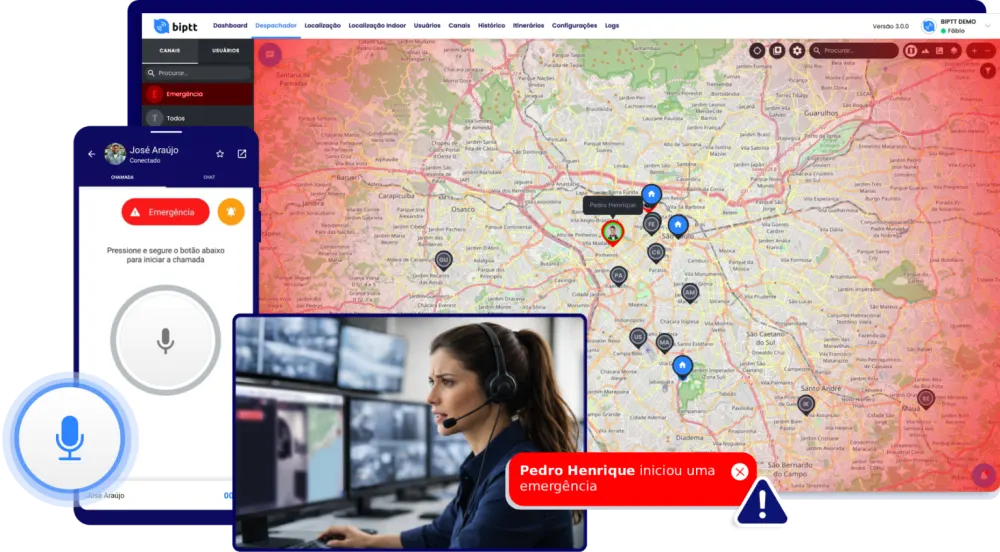
StaySafe is a dedicated lone worker alarm. BiPTT combines SOS, man-down and check-in with Push-to-Talk voice and dispatch. An honest comparison for UK operations.
We use analytics and marketing cookies to improve your experience and measure our campaigns. You can reject marketing cookies. Privacy policy